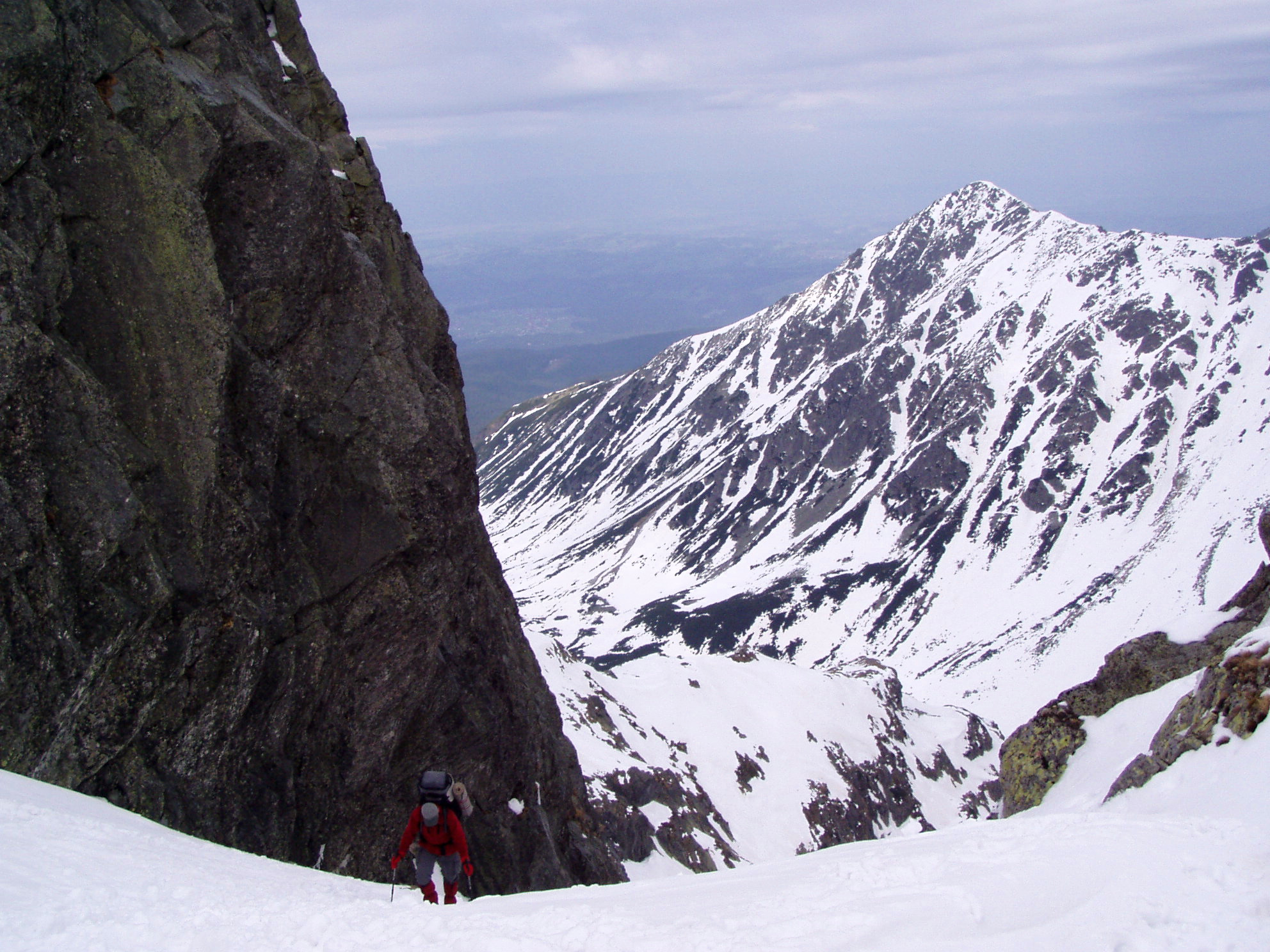
Equipment decisions for Polish mountain hiking are shaped by two factors that don't always appear in generic gear guides: the variability of conditions across relatively short elevation bands, and the dense, often muddy forest terrain that precedes the open ridgelines in most ranges. A kit that works well on a clear September day in the Gorce may be inadequate on the same route in May, when snowpack can remain above 1,000 metres and afternoon temperatures drop sharply.
Footwear categories and terrain matching
Polish mountain terrain broadly divides into three surface types: maintained gravel paths and boardwalks, mixed rock-and-root forest trails, and exposed rock above the treeline. Each type makes different demands on footwear.
| Boot category | Sole rigidity | Suitable terrain in Poland | Ranges where relevant |
|---|---|---|---|
| B0 – Trail shoe | Flexible full-length | Maintained paths, forest tracks, dry conditions only | Jura, Roztocze, lowland areas |
| B1 – Light hiking boot | Semi-flexible, ankle support | Mixed terrain, root sections, light mud | Gorce, Bieszczady (summer), Beskid Niski |
| B2 – Mountain boot | Stiff midsole, crampons compatible | Rocky ascents, sustained ridge walking, autumn mud | Tatry, Karkonosze, Babia Góra |
| B3 – Alpine boot | Full rigidity, C2 crampon compatible | Technical winter routes, ice, demanding summer ridges | Tatry (Orla Perć, winter routes) |
Waterproofing is a persistent question. Gore-Tex membranes work well in light rain but saturate in extended downpours, particularly when combined with deep mud that forces water over the ankle cuff. A mid-height waterproof boot (B1 category) with gaiters handles most conditions in the Gorce and Bieszczady better than a tall waterproof boot that restricts ankle movement.
Layering for Polish mountain conditions
The temperature differential between valley trailheads and summit ridges in Poland ranges from 8°C to 14°C depending on the season and elevation. In the High Tatras, the summit zone sits above 2,000 metres — cold enough for wind chill to be significant even in July when valley temperatures reach 28°C. The standard three-layer approach remains appropriate, but the specific weights in each layer change by season.
Base layer
Merino wool or synthetic moisture-wicking material. Cotton is avoided by experienced hikers on any route with significant elevation gain because it retains moisture and loses insulating properties when wet. A lightweight 150 g/m² merino is sufficient for summer; a 200–250 g/m² weight suits shoulder seasons.
Mid layer
A fleece or insulated jacket. For summer day hikes in the Gorce or Bieszczady, a 100-weight fleece packed in the bag is usually enough. For Tatra ridges or autumn hiking in any range, a 200-weight or light synthetic insulated jacket is more practical. Down is efficient but loses insulating value when wet — an important consideration given Polish weather patterns.
Outer layer
Hardshell jackets rated above 10,000 mm hydrostatic head handle most Polish mountain rain. Softshells are adequate in the Bieszczady in summer but offer insufficient protection on exposed Tatra ridges where wind and rain combine. Packable size matters — a jacket that stays in the bag because it's bulky provides no protection.
Trekking poles: when they help and when they don't
Trekking poles are nearly universal among experienced hikers on Polish trails, particularly on routes with significant descent. The reasons are terrain-specific:
- The mud and root sections common in forested Carpathian terrain are significantly more stable with poles. A single planted pole while crossing a root network prevents the sideways slip that causes most soft-terrain falls.
- On descents above 25° gradient — common in moderate-rated routes in the Tatras and Babia Góra — poles transfer approximately 20–25 percent of the load from knees to upper body over a full day, which reduces post-trip discomfort substantially.
- On scrambling sections with fixed chains, poles become a liability. They should be stowed on harness points or inside the pack before chain passages, not dangled from wrist straps.
Aluminium poles (roughly 400–500 g per pair) are adequate for most conditions. Carbon poles save weight but are prone to brittle failure on rock impact — a real risk on the scree slopes of the Tatry and Karkonosze. Locking mechanism matters: flip-lock systems are more reliable than twist-locks in cold conditions when hands are gloved.
Pack weight benchmarks
Day hiking in Polish mountains typically involves a pack in the 8–14 litre range for summer routes, expanding to 20–30 litres for routes with significant weather exposure or multi-shelter traverses. The items that most often add unexpected weight are water (1 litre = 1 kg) and clothing removed mid-hike.
| Route type | Target pack weight (loaded) | Key contents |
|---|---|---|
| Short forest walk (up to 3 h) | 3–5 kg | 1 L water, light snack, windshell |
| Full-day mountain route | 7–10 kg | 2 L water, food, layers, first aid, map |
| Demanding Tatra ridge (summer) | 10–14 kg | 2.5 L water, hardshell, extra layers, headlamp, emergency bivvy |
| Winter day route | 14–18 kg | Crampons, ice axe (where required), thermos, full winter kit |
Mountain hut logistics and what to carry less of
Poland has a significant number of PTTK-operated mountain huts (schroniska górskie) in the Tatras, Beskidy, and Sudety. Most provide meals, hot drinks, and basic accommodation. On routes that pass through or near huts, carrying a full water supply is often unnecessary — huts sell water and have drinking sources nearby. Checking hut locations on the PTTK map before packing reduces weight without compromising safety.
Seasonal additions: a short list
Spring (March–May)
Microspikes or Kahtoola-style traction devices for snow-covered paths below the upper Tatra zone. Full crampons are overkill below 1,500 m in spring but microspikes handle consolidated morning snow effectively. Gaiters for mud and wet grass.
Summer (June–August)
Sun protection above the treeline. A 50 SPF sunscreen and lip balm with UV protection are relevant on Tatra ridges where UV index reaches 9–10 at peak hours. Insect repellent for forested lowland sections in the Bieszczady, where ticks are present from April through October.
Autumn (September–November)
The full outer shell rather than just a windshell. September is the wettest month in most Polish mountain ranges. Visibility gloves (thin merino liners) for ridge sections where temperatures drop below 5°C even in early autumn.
Winter (December–February)
B2/B3 boots with C1/C2 crampons, ice axe for slopes above 35°, balaclava, insulated gloves, and a full hardshell set. Winter hiking in the Tatras above 1,500 m is serious mountaineering territory. TOPR statistics show that the majority of serious incidents involve visitors who underestimated winter conditions with summer kit.
Related reading: Trail difficulty classifications in Poland and Waymarking systems on Polish hiking trails.